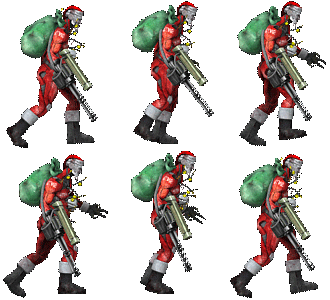
KF2 Guide to ZED Classes and Correct Gun Terminology
This 2015 Early Access guide, written in a deliberately over-the-top "manly" voice, argues that Killing Floor 2 players should use the right words for guns, vehicles and ZEDs. The author was annoyed by the in-game voice lines that call every magazine a "clip", and by newcomers who muddle the terms. What follows is a lightly paraphrased summary. For a modern bestiary see the ZED bestiary.
 Header image from the original guide.
ZED classes
The terms specimens and ZEDs both mean the enemies.
Trash ZEDs
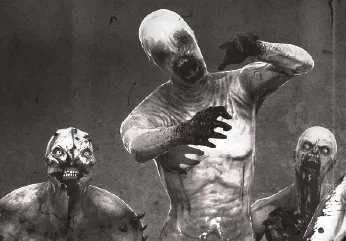 Clots and their variants.
"Trash" is the general term for specimens that rely on volume rather than strength. They are dangerous in packs but weak and easily dispersed with the right counter. The most common are Clots and variants: the Cyst is the weakest and the Slasher the strongest. They are pure cannon fodder.
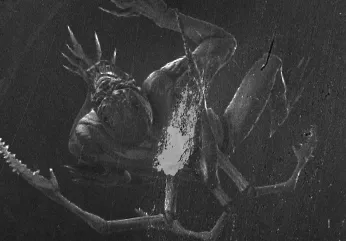 Crawler.
Crawlers cannot walk on walls as originally advertised, but are still a bigger threat than Clots: hard to see and quick, a swarm can do damage if ignored.
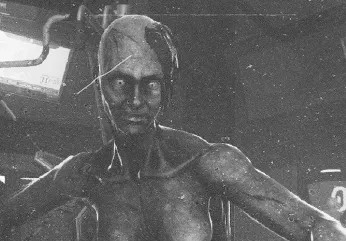 Stalker.
Stalkers use cloaking and speed. A pack can deal a lot of damage if ignored. A good counter is a Commando using the Call Out skill so teammates can see them.
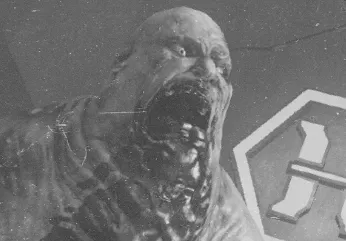 Bloat.
Bloats are the meat shields. They usually come alone or in pairs, hide other ZEDs and their bile is dangerous. They have too much body health to kill economically, so remove the head. A Bloat can also body-block your escape.
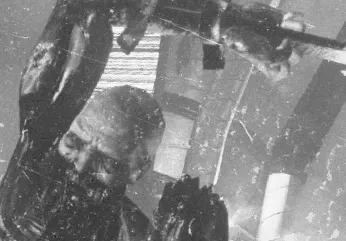 Gorefast.
Gorefast is the most dangerous trash if ignored: nimble, fast and capable of more than moderate damage. Deal with it like the Bloat, by taking its head quickly.
2nd-class ZEDs
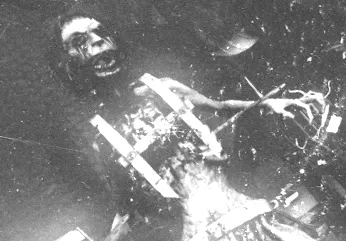 Siren.
These are just below a power ZED: lots of health, agility and high DPS. The Siren scream ignores armor and destroys grenades. She has a lot of body and head health, and usually comes with an escort of trash. Deal with her immediately. Favorites are a point-blank double-barrel shell, Commando headshots, or a Pulverizer swing.
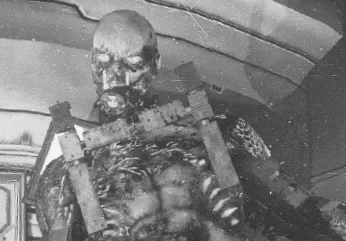 Husk.
The Husk has substantial body health, long range and high accuracy. On Suicidal and Hell on Earth it gains a point-blank flame attack that can wipe out players who get too close. At low health it may suicide charge into the front line and explode, usually killing anyone nearby. His head is the best weak point.
1st-class or power ZEDs
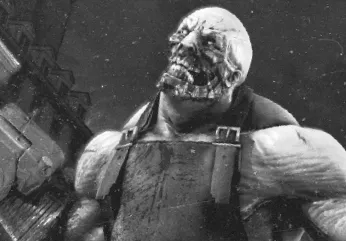 Scrake.
The Scrake (SC) can wipe several players or the whole team if unchecked, with great speed and a chainsaw. It has no hard counter, only soft ones. AA12 and double barrels work, as does circling behind it with a Berserker meleeing it so it cannot fight back. The shotgun method is simpler and safer but costs more ammo, while the melee method needs skill and teammates to protect the Berserker. The author says the Scrake shows up around waves 5 to 10 and spawns endlessly until the boss, in great numbers.
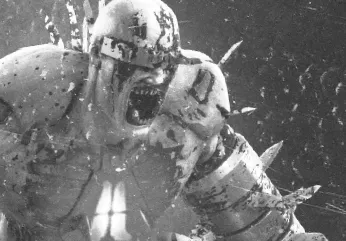 Fleshpound.
The Fleshpound (FP) was meant to be the mini-boss as in KF1, but because it spawns in smaller numbers and is slower, at the time of writing it ranked a step below the Scrake.
Boss
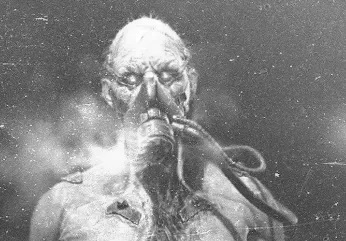 Hans Volter.
Hans Volter was the only boss of KF2 at the time. He carries twin STG-44 rifles he calls "Twin Fangs" and throws three grenade types: smoke, frag and nerve gas, which cuts through both armor and health and denies an area. He is faster than any player can run and his melee is very strong. He has several heals in which he grabs a player and drains health to restore his own. The author recommends a Berserker and Medic team: the Berserker circle-strafes him until his last heal, then Supports with AA12s finish him.
The basics of ammunition
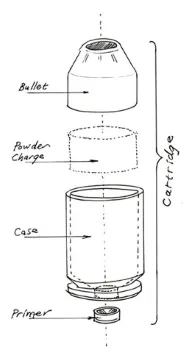 A standard cartridge.
What people call a bullet is one component of a round or cartridge. The pictured one has a hollow point bullet, designed to penetrate less and cause more internal damage, giving more stopping power. The full metal jacket does not mushroom inside the target and often passes through. The casing (brass or steel) holds the charge, primer and bullet. When you pull the trigger, the hammer strikes the primer, igniting the charge, which pushes the bullet out of the barrel in a controlled explosion.
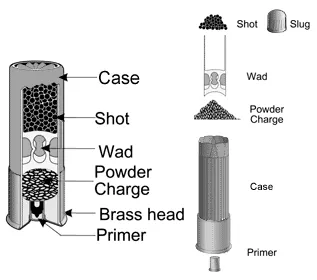 A shotgun shell.
A shell works on the same principles with key differences. The hull is usually plastic (originally paper). It can fire anything held in the wad: most commonly birdshot (many small steel balls) or a solid slug, as well as exotics like dragon's breath, flechettes and buck and ball.
Magazines 101
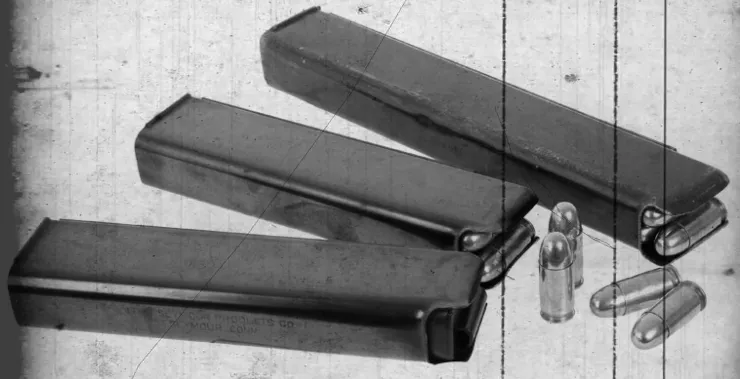 A basic magazine.
A magazine holds cartridges and pushes them into the chamber by a strong spring. They vary in size and shape and can even be built into the gun.
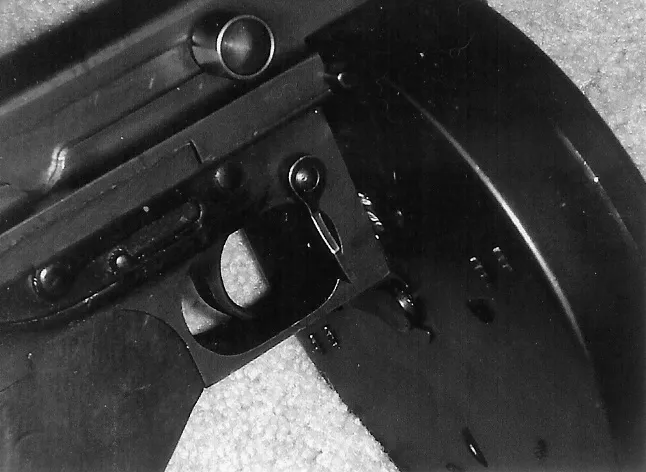 A drum magazine on a Thompson.
A drum magazine works on the same principle but the spring is coiled in a large circle, which allows more rounds without a long straight magazine. The Thompson is the classic example.
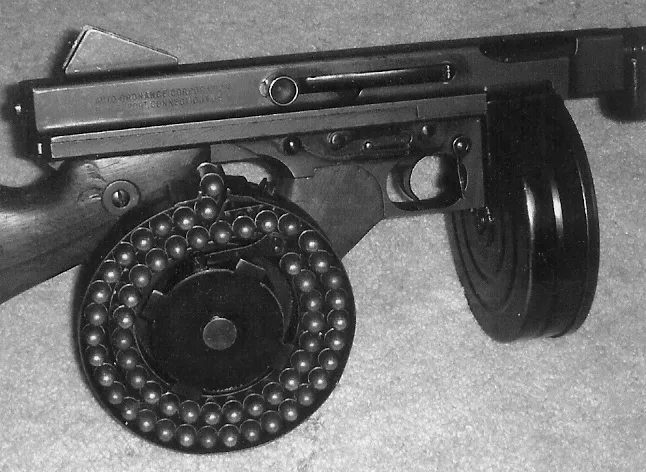 A cutaway of the drum.
The same principle applies to the shotgun shells in the AA12 drum, an alternative to the old tradition of tube magazines.
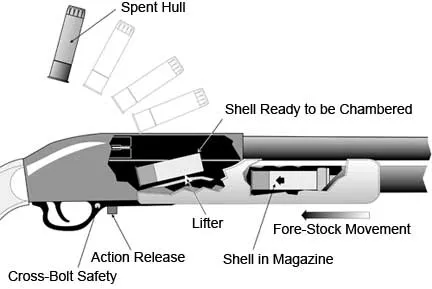 A tubular magazine cutaway.
With a tubular magazine racking the shotgun moves the shell to the rear of the gun and ejects the spent hull. Capacity is limited by barrel length or by laws that require magazine plugs.
Stripper clips
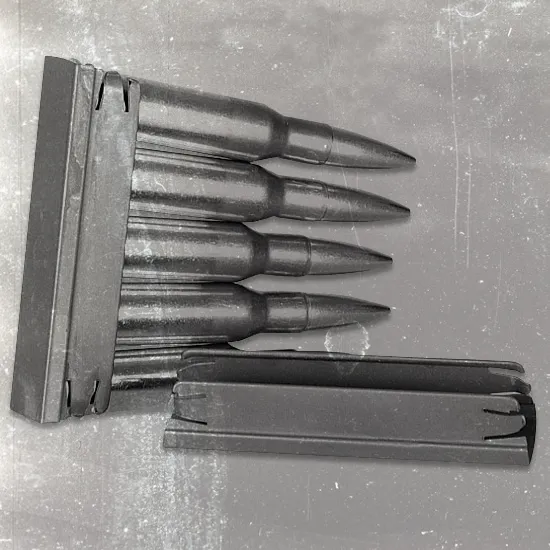 A loaded and an empty stripper clip.
Stripper clips are mainly used to load internal magazines built into rifles such as the SKS or Mosin-Nagant, making reloading easier in combat so the rifleman returns to full capacity quickly.
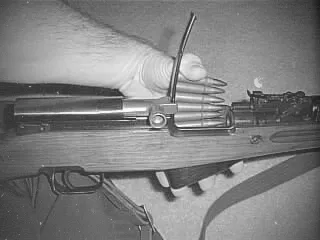 Pushing the rounds in with the thumb.
Push the rounds into the internal magazine with the thumb, remove the clip and work the action. Remember: a clip is not a magazine.
Speed loaders
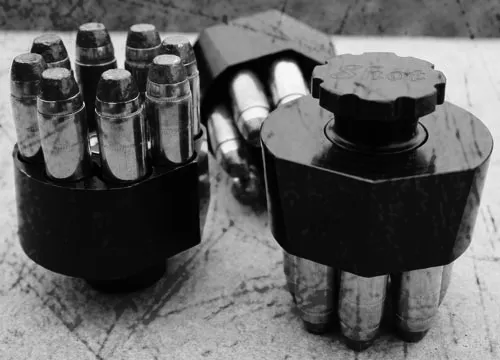 A speed loader for a revolver.
A speed loader lets a shooter load a whole set of rounds into a revolver's cylinder at once. It is the fastest way to reload a revolver and puts it on even ground with modern pistols.
Trucks versus snowcats
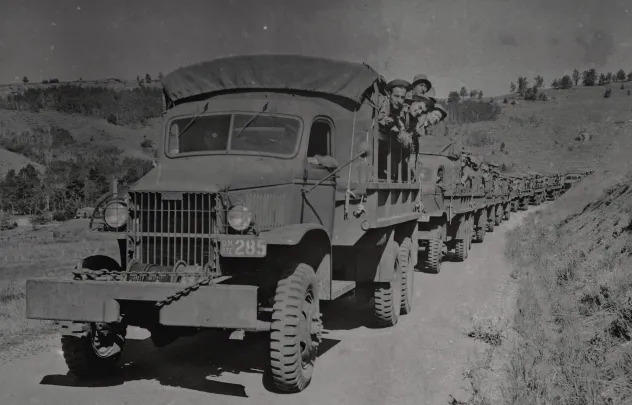 A truck.
Trucks vary in shape and power but share one function: moving cargo. They are characterized by many wheels (no tracks), an iconic front grille and a lot of horsepower, and most run on diesel.
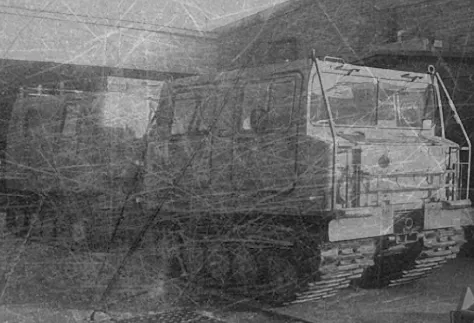 A snowcat.
Snowcats are tracked vehicles designed to move people through winter and to move snow, and the author notes that in KF2 they are seen only on Outpost. Tracks give more control and versatility than half-tracks and standard trucks in such terrain.
Closing words
The author invited suggestions and updates, and ended with a wish to keep your wits and stay frosty under pressure. For general newcomer information see the beginner guide.
FAQ
- What is the difference between a clip and a magazine?
- A magazine holds cartridges and pushes them to the chamber with a spring, and can be removable or built in. A stripper clip is a small strip used to load an internal magazine such as on an SKS or Mosin-Nagant. The guide's refrain is that a clip is not a magazine.
- What does the guide call 'trash' ZEDs?
- The weak mass-spawn specimens: Clots and their variants (Cyst, Slasher), Crawlers, Stalkers, Bloats and Gorefasts. In the wider KF vocabulary trash can mean anything other than a Scrake or Fleshpound.
- Which ZEDs are the first-class power threats?
- The Scrake and the Fleshpound. The author ranks the Scrake as the higher threat in early KF2 since Fleshpounds spawned in lower numbers.